
How Nutrition Shapes Skin Structure, Barrier Function and Repair

How Nutrition Shapes Skin Structure, Barrier Function and Repair

Building Strong Foundations Through Ancestral Strength 

Skin is often spoken about in cosmetic terms — how it looks, how it ages, how to improve its surface. 

From a biological perspective, it functions very differently. 

Skin is a metabolically active organ. It renews continuously, regulates water balance, mounts immune responses, and forms the body’s first structural barrier. Its appearance reflects how effectively the body can build protein structures, regulate inflammation, and repair tissue over time. 

As we move into spring — a season associated with renewal — and approach moments like Mother’s Day that honour care and resilience, it’s a timely reminder that skin strength is built the same way: through consistent internal nourishment. 

Understanding skin health means looking beyond the surface, to the nutritional and physiological systems that sustain it. 

1. Protein intake and structural integrity 

Beneath the surface of the skin sits the dermis — a dense connective tissue layer rich in collagen and elastin. These structural proteins provide tensile strength, elasticity, and resistance to mechanical stress. 

Collagen synthesis depends on several nutritional inputs: 

  • Adequate total protein intake 

  • Amino acids such as glycine and proline 

  • Vitamin C as a cofactor 

  • Iron and copper for enzymatic activation 

From the mid-twenties onward, endogenous collagen production gradually declines. When dietary protein is inconsistent or insufficient, the body prioritises vital organs over structural tissues like skin. 

Over time, this can influence elasticity, firmness, and repair capacity. 

Foundational considerations: 

  • Aim for consistent daily protein intake rather than uneven distribution 

  • Include complete protein sources across meals 

  • Consider collagen peptides where connective tissue intake is low 

Ancestral diets naturally incorporated slow-cooked meats, skin, cartilage, and bone broths — providing glycine-rich support for connective tissue structures. Modern dietary patterns often contain far less of these components. 

2.Skin barrier function and essential fatty acids 

The outermost layer of the skin — the stratum corneum — contains lipid structures that regulate hydration and protect against environmental stressors. 

These lipids depend partly on dietary fat quality. 

Omega-3 fatty acids contribute to membrane fluidity and help modulate inflammatory signalling pathways involved in barrier function. Low intake may compromise resilience, increasing trans-epidermal water loss and skin reactivity. 

Foundational considerations: 

  • Include oily fish, flax or chia regularly 

  • Avoid chronically low-fat diets 

  • Pair healthy fats with fat-soluble vitamins such as A and E 

Barrier strength is not built solely through topical application. It reflects the lipids delivered systemically through nutrition. 

3. Blood glucose regulation and collagen stability 

Collagen integrity can be influenced by glycation — a biochemical process in which glucose binds to proteins. 

When blood glucose levels remain chronically elevated, glycation end-products accumulate within collagen fibres, reducing flexibility and impairing structural function. 

Over time, this may affect both skin resilience and visible ageing patterns. 

Foundational considerations: 

  • Combine carbohydrates with protein and fibre 

  • Avoid large, isolated sugar loads 

  • Maintain muscle mass to improve glucose disposal 

This is not about eliminating carbohydrates — but about supporting metabolic steadiness that protects structural proteins. 

4. Micronutrients and repair capacity 

Skin renewal and wound repair are nutrient-intensive processes requiring sufficient micronutrient availability. 

Key contributors include: 

  • Zinc — supports normal tissue repair 

  • Vitamin A — regulates keratinocyte differentiation 

  • Vitamin C — contributes to normal collagen formation 

  • Selenium — supports antioxidant defence 

Subclinical deficiencies may not present dramatically but can influence healing time, dryness, or skin reactivity. 

Foundational considerations: 

  • Prioritise a diverse whole-food diet 

  • Support digestive function where absorption is impaired 

  • Investigate persistent skin issues systemically, not solely topically 

Repair efficiency reflects nutrient availability at the cellular level. 

5. The gut-skin axis 

The intestinal lining and the skin share structural and immunological similarities. Both rely on tight junction integrity and regulated immune signalling. 

Disruptions in gut permeability or microbial balance may contribute to systemic inflammatory signalling, which can present dermatologically in some individuals. 

Supporting gut health may indirectly influence skin resilience. 

Foundational considerations: 

  • Ensure adequate protein intake 

  • Include fermented foods where tolerated 

  • Maintain sufficient fibre diversity 

  • Support stress regulation 

When inflammatory load is reduced internally, skin often reflects that shift externally. 

6.Recovery, exercise and tissue turnover 

Exercise stimulates collagen turnover within connective tissue. Adaptation occurs during recovery, not during exertion itself. 

Protein consumed post-exercise provides amino acids required for tissue repair, while glycine — abundant in collagen — contributes to connective tissue matrix formation. 

Sleep also plays a measurable role. Growth hormone release during deep sleep supports structural repair processes throughout the body, including skin. 

Foundational considerations: 

  • Consume protein within a few hours of resistance training 

  • Support recovery nutrition consistently 

  • Prioritise deep, restorative sleep 

Repair is cumulative — shaped by the rhythm between stimulus and recovery. 

Skin as a reflection of nutritional foundations 

Skin health is not built through isolated interventions. It reflects the consistency of underlying biological inputs: 

  • Protein distribution 

  • Fat quality 

  • Micronutrient sufficiency 

  • Blood glucose balance 

  • Gut integrity 

  • Sleep and recovery 

Where modern dietary patterns often fall short is in connective tissue nutrition. 

Historically, ancestral diets incorporated the whole animal — slow-cooked meats, skin, cartilage, and bone broths — naturally supplying glycine, proline, and other amino acids required for collagen formation and structural repair. Today, these components are consumed far less frequently. 

In this context, supplementing with high-quality collagen peptides can serve as a practical nutritional adjunct, helping support overall protein intake while providing targeted building blocks for skin and connective tissue structures. 

For those looking to support skin foundations more intentionally, specific collagen supplements can be selected based on both source and structural diversity. 

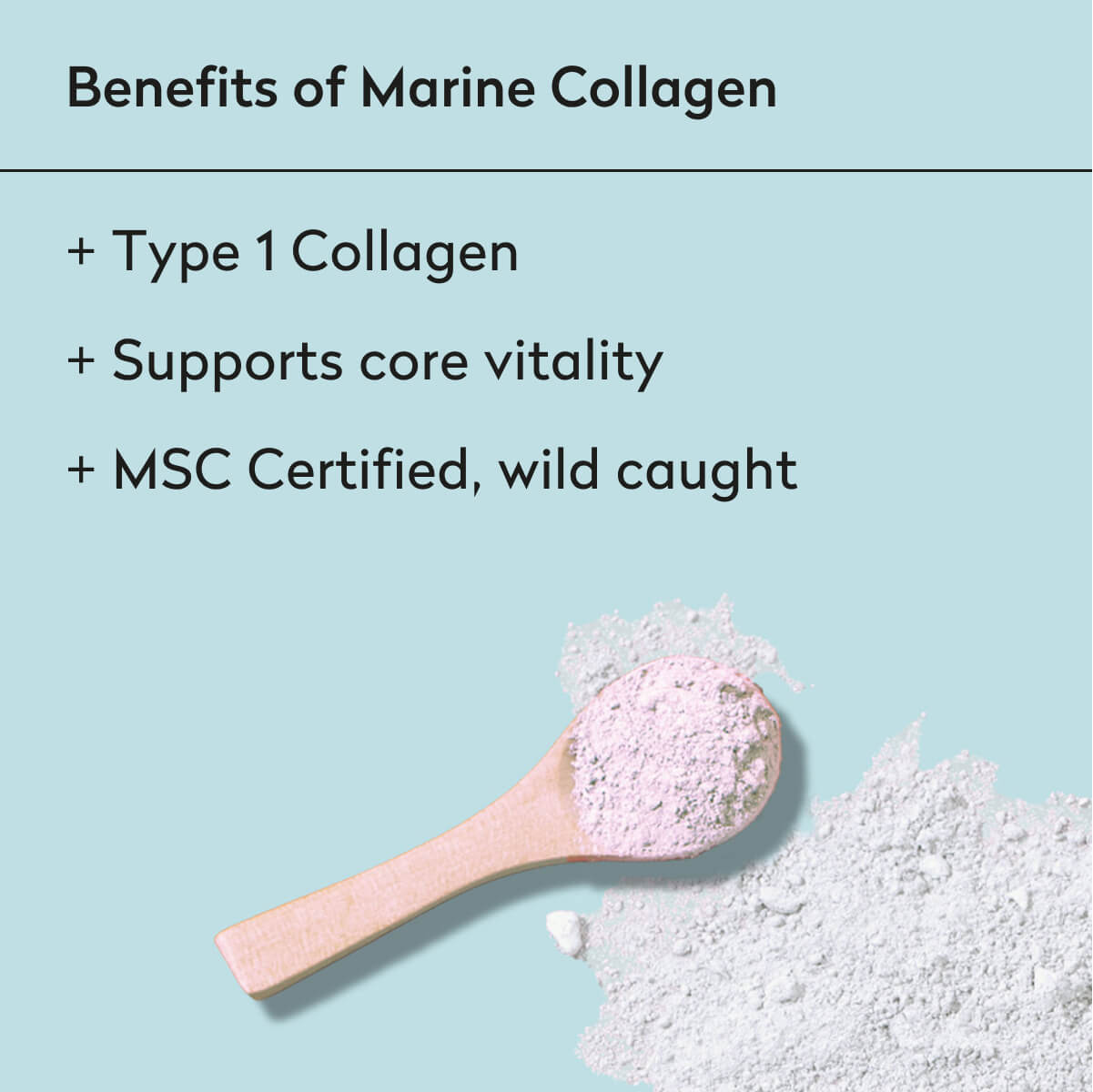
Marine Collagen Powder offers a highly bioavailable source of Type I collagen, derived from wild-caught white fish and certified by the Marine Stewardship Council (MSC). Naturally rich in skin-relevant amino acids often lacking in standard dietary patterns, it supports skin structure, bone health, and overall connective tissue wellbeing while aligning with strict sustainability standards. 

For broader structural coverage, Multi Collagen provides a five-type collagen complex designed to reflect the diversity of collagen found within the body. This formula combines: 

  • LIAF grass-fed bovine collagen supplying Type I and III peptides 

  • Wild-caught marine collagen contributing additional structural support 

  • Free-range eggshell membrane — an industry-first inclusion providing Type V and X collagen 

It also includes vitamin C and silica, nutrients that contribute to normal collagen formation and connective tissue integrity, supporting the body’s own production pathways alongside direct collagen intake. 

Used consistently, these formats help bridge the gap between ancestral nourishment and modern convenience, supporting the structural inputs that skin relies on over time. 

Its appearance becomes less about surface correction and more about how effectively the body is nourished, regulated, and able to repair. 

 Seasonal reflection: renewal from within 

Spring represents restoration — longer light exposure, seasonal foods, renewed daily rhythms. 

Supporting skin during this period aligns with that broader biological shift: strengthening barrier function, rebuilding collagen structures, and nourishing repair pathways. 

Around Mother’s Day, that reflection can carry added meaning. 

Skin resilience, much like maternal strength, is built quietly — through sustained nourishment, recovery, and care delivered consistently over time. 

Because true structural integrity, whether in skin or in health, is never created overnight. 

It is built, layer by living layer, from the inside out. 


Featured products